Showing posts with label Traditional. Show all posts

Thursday, 29 October 2015

Divil's nose


Today I thought I'd share with you a sweet treat for Halloween. And I have to be honest, it's purely because of the name: my Great Grandmother called it Divil's Nose!  It probably goes by different names around the country but this one seems to be unique to the Wigan area where she grew up. In fact, I found out that it also goes by the name of Singing Lily, possibly in honour of the Wigan lass, Lily Brayton, who was an actress and singer in the early 1900s.

But what is this Divil's Nose? Well, actually, it's what I've always known as a Chorley cake: a layer of raisins between 2 layers of pastry. A frugal dish born of a time when you had to use up every last scrap of food. The ingredients are simply:

Leftover pastry
Currants, or other dried fruits
Sugar
A knob of butter


Roll out the pastry into a round. Put the dried fruit in the centre, sprinkle with sugar and add a knob of butter.


Run a wet finger around the edge and then fold the edges of the pastry into the centre.


Turn it over so the folded edges are underneath. Roll out until the fruit shows through. Put on a baking sheet lined with greaseproof paper and bake in the oven on 160C/Gas 3 until lightly golden.


Serve as it is or, as we used to when I was little, spread with butter. Mum said mine was a bit thin and I'd browned it too much! Oh dear. It didn't stop her having a piece though :-)

However, she had no complaints about my second version. I wanted to spice it up a bit and, as Chickpea isn't keen on currants, use a different dried fruit.


Instead, I used chopped dates and soaked them in a good splosh of dark rum. Then I spread it out over the pastry as normal.


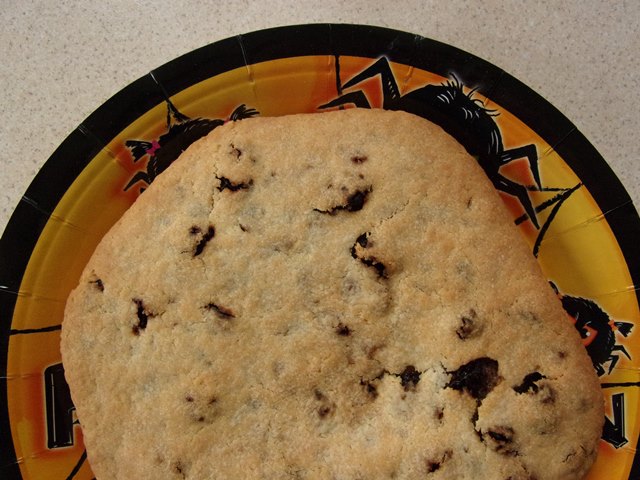
My pastry was a cobbler mix and already on the damp side. As I folded it in, the extra moisture from the rum made it tear. For this reason, I didn't bother to roll it out but just plonked it on the baking tray.


Rather more rustic in appearance but, oh so good! We actually preferred this version as the rum-soaked fruit made it moist and the cracks in the pastry made the buttery, sugary juices ooze and caramelise on the top. Yum yum yum! I'll be making this version again.

So there you have it, 2 versions of Divil's Nose. What is it called where you live?

I'll be back on Halloween but not with anything spooky: it's Scavenger Hunt time. In fact, I don't even know if we'll be doing anything Halloweeny as we're meeting a group of friends in Manchester for pizza and James Bond! I do have my pumpkin head boppers at the ready though...

See you on Saturday. Almost the weekend. Hurrah!

Monday, 8 December 2014

Lancashire Night


Time is just flying by and I'm finding it difficult to spare a few moments for blogging. I did promise to tell you about our Lancashire night though.

We had such fun on Burns Night back in January that me and my friends, Sue and Gordon, decided to try celebrating other occasions, momentous or downright obscure! Most recently, we had a Welsh Night in October for Dylan Thomas' birthday and next up was Lancashire Night.

We chose the Saturday nearest to 27 November which commemorates the day in 1295 when Lancashire sent its first representatives to parliament and I decided to steal a few ideas from Burns Night for the running order and entertainment.


Once everyone had arrived and was settled with a drink in hand, I proudly read out the Lancashire Proclamation, wearing my handmade brooch. The Proclamation is a bit long so you can read it here.


Next up was a spot of morris dancing to the Manchester Hornpipe. Imagine if you will, 5 fully grown adults ranging in age from 20s to 50s, including 6'2" Christopher, parading around the living room waving red roses in the air and making arches with the roses for everyone else to shimmy underneath. Well, you get the picture. My sides ached from laughing.


And so to the food. At Burns Night, there's an ode to the haggis, so it seemed only right to have an ode to the black pudding (which I found here).

Black pudding made us what we are.
It gave us wit and wisdom.
For the blood of pigs runs through our veins,
Or at least our digestive system.
Black pudding, black pudding, I give this ode
To you all, be you Scottish or foreign.

The Lancashire peeler was symbolically presented to the pudding and it was time to serve dinner.


While I dished up, the others listened to Chippy Tea by The Lancashire Hotpots.

Funnily enough, Lancashire hotpot was on the menu, made using this recipe (and very tasty it was too). There was also the black pudding and black peas, pickled red cabbage and pickled beetroot - all traditional Lancastrian fare.

While we ate, we watched the Wallace and Gromit classic, The Wrong Trousers, which is set in Wigan and is by Preston-born, Nick Park.


For dessert, more Lancashire goodies. We clearly like pastry very much! There's shop-bought custard tarts and Eccles cakes, and homemade Goosnargh cakes and jam slice. Sue's 8-year-old son had 4 of the Goosnargh cakes and they took the rest home with them! I hadn't made jam slice before even though I've eaten it many times - will have to share the recipe sometime as it was so simple and a brilliant use for my blackberry jam.

And there ended the Lancashire part of the evening as we then settled down to watch Maleficent. Hope you enjoyed hearing about all our silliness! We definitely did and I think Chris has invited himself back for Burns Night and probably all the other evenings he suggested we had!


I thought I'd end by giving you an update on my crochet blanket which I'm doing as part of Attic24's Crochet-A-Long. It's actually a bit longer than this now but I forgot to take a photo when the light was good. I'm more or less following her sequence of colours but have also added in a couple of my own, like the dark purple, just so that it's not quite the same as everyone else's. I'm enjoying it so much and can't wait to work on it each evening. Unfortunately it's going to have to take a back seat shortly as I have more urgent crafting matters to get on with. I foolishly offered to lead a session on mug hugs at my quilt group 'towards the end of next year' and found out last week that I've been pencilled in for February! I haven't even made one yet!! Keep calm and make mug hugs! x

Monday, 25 November 2013

Cattern cakes


Today is St Catherine's Day, patron saint of spinsters, spinners and lace makers, and also whom the Catherine Wheel firework is named after. 

I hadn't really heard of St Catherine until I read about her in my new favourite book, Cattern Cakes and Lace, which I uncovered in an Oxfam bookshop a few weeks ago. It only took a quick flick through the pages and there was no question that it was coming home with me!


I really can't describe this lovely book better than by quoting the blurb on the back cover: "An enchanting...calendar of traditional festivals and feast days, and the foods [and] folklore...associated with them." 


What makes me love it so much is how it's illustrated. Every page is decorated with objects and images relevant to the custom and the season: lace, buttons, bobbins and beads, seashells, seeds, flowers, fruit and leaves, poems, pictures and postcards.


It's taken me ages to write this post because I have the book at the side of me and can't resist reaching over to leaf through the pages. Sadly it's out of print but there are lots of second hand copies available from your favourite online stores.

As I did with Nigel Slater's Kitchen Diaries, I'm trying to read it bit by bit following the months, which is what brought me to November and the Cattern Cakes of the title. Cattern is a corruption of the name Catherine and the cakes were traditionally eaten by lace makers in Tudor times to celebrate her day.


They're really more of a biscuit than a cake but what drew me in was the inclusion of caraway seeds as I still have lots left over from making the Goosnargh cakes back in March. There are other versions of this recipe which include yeast but I stayed faithful to the version in the book.


If I made them again, I'd make a couple of changes. The mixture was very crumbly and difficult to pull together. Even half an hour in the fridge didn't help so I'd recommend adding a few drops of water to help with rolling out. 

The other change I'd try is not adding the cinnamon to the mixture but saving it for sprinkling on the dough before rolling up. That way you'd get more colour and definition in the spiral. Of course you could add it to the dough too if you really like cinnamon!

They went down a treat with the girls at work and I found they were better the next day when they'd firmed up and the spices had had plenty of time to permeate. I hope you like them. x


Cattern cakes

275g self-raising flour
1/4 tsp ground cinnamon
25g currants
50g ground almonds
2 tsp caraway seeds
200g caster sugar
100g melted butter
1 egg, beaten
Extra caster sugar and cinnamon for sprinkling

Preheat the oven to 200C/Fan 180C/Gas 6

1. Put all of the dry ingredients into a bowl.
2. Add the butter and beaten egg and mix well to give a soft dough. You might need to add a few drops of water at this point to help the mixture come together.
3. Roll out into a rectangle until the dough is about 1cm thick.
4. Brush the dough with water and sprinkle over the cinnamon and sugar.
5. Roll up like a swiss roll and cut into 2cm slices.
6. Place on a baking sheet leaving plenty of space as the biscuits will spread. Bake for about 10 minutes.
7. Leave to cool completely.

Tuesday, 5 November 2013

Firelighters


I thought I knew all of the cookery books that Mum owns but, when I was there the other day, I came across this very battered little gem. Family Fare was published by The Co-operative Wholesale Society - yes, the good old Co-op - and we think it dates from the late 50s/early 60s as Mum bought it when she worked for them. At that time it sold for the very reasonable price of 1/6 (1 shilling and 6 pence).

Naturally, the first sections I turned to were for cakes, scones and biscuits and it was here that I found Firelighters. The name alone seemed perfect for a recipe to share on Bonfire Night.


As the book was published by the Co-op, the recipes are used to promote their products such as Wheatsheaf evaporated milk, Eskimo frozen cod and Silver Seal margarine. This one though used Cremo oats. Despite a good hunt on the internet I couldn't find out what kind of oats these were but, since firelighters seemed to be a kind of flapjack, I guessed at rolled oats. It was only afterwards that I thought to search for 'firelighters' and came across a traditional recipe called Stanhope Firelighters. The difference is that this one includes coconut and I've added my own twist of glace cherries to represent the glowing embers of the fire.


Firelighters

100g soft brown sugar
100g butter
1 tbsp golden syrup
200g rolled oats
25g dessicated coconut
1 tsp baking powder
75g glace cherries, quartered
pinch of salt

1. Preheat the oven to Gas 4/180C/160 Fan
2. Melt the butter, sugar and golden syrup in a pan.
3. Mix together all of the dry ingredients in a bowl, including the cherries.
4. Add the dry ingredients to the wet ingredients and mix thoroughly.
5. Press into a 28 x 18 cm tin, or whatever size you have to give a depth of about 1.5cm.
6. Bake for 20 minutes.
7. Leave in the tin but, while still warm, cut or score into pieces and leave to cool.


A sweet treat to enjoy by the bonfire :)

I'm at my yoga class tonight so won't be going to our usual fireworks display. If the weather is still fine when I get home, we might wave a few sparklers around in the garden. Hope you have a lovely evening wherever you are and stay safe. x

Monday, 15 July 2013

Cherry dumpers


Well, I promised you sausages and instead you get cherries! Did you know that tomorrow, 16 July, is National Cherry Day here in the UK? Neither did I until I stumbled across a reference to it recently. Cherries are one of my favourite fruits and I wait eagerly for the summer glut when prices start to fall. 

Amazingly, 95% of the cherries we eat are imported which is not good news for the fruit growing industry in Britain. And which therefore makes me ashamed to admit that my favourites are the sweet picota cherries from Spain: I'll probably be thrown in the Tower of London for treason. However, to celebrate this Day and redeem myself, I'm going to share with you a very traditional recipe for Cherry Dumpers, which originated in Buckinghamshire.


I love traditional recipes and who could resist one with such a great name! They're also known as Bumpers and were usually eaten on Cherry Pie Sunday which is the first Sunday in August. They really couldn't be simpler to make.

You'll need:
Shortcrust pastry (home made using your favourite recipe, or bought)
100% British cherries, pitted
Granulated sugar
Milk or egg to glaze
Caster sugar


Make the pastry and roll out. Use a small plate to cut out circles - the size of plate will depend on how big you like your dumpers. We're pretty greedy when it comes to sweet things so I used an 18cm tea plate.

Pile some cherries in the middle of the circle and sprinkle with granulated sugar. Brush the edge of one half with water using a brush or your finger. Fold over one side to meet the other to make a half circle. You'll probably need less cherries than you think as I had to pop a few of these in my mouth to get the sides to meet! Crimp the edge using a fork and brush with milk or beaten egg. Place on a greased baking tray and pop in the oven for 20-30 minutes at 200C/180C Fan/Gas 6.


Remove when golden and sprinkle with caster sugar whilst still hot. You can serve as they are or with cream or ice cream. I found them a little plain so, if I made them again, I'd probably experiment by using a more buttery pastry or by tossing the fruit in liqueur or cordial, or even in some ground almonds.

If you don't fancy a Dumper, how about celebrating with a different recipe? One of my own favourites is Cherry Eton Mess. In America, you could almost celebrate lovely juicy cherries with a different recipe every month. 17 May 2014 has been declared National Cherry Cobbler Day. Doesn't appeal? Well what about Cherry Tart (18 June)? Or Cherry Cheesecake (23 April)? Or Chocolate-Covered Cherries (3 January)? Or even the August double whammy of Cherry Popsicle (26 August) and Cherry Turnovers (28 August)!

Which one would you choose? Or do you have another favourite? x

Thursday, 28 March 2013

Goosnargh cakes


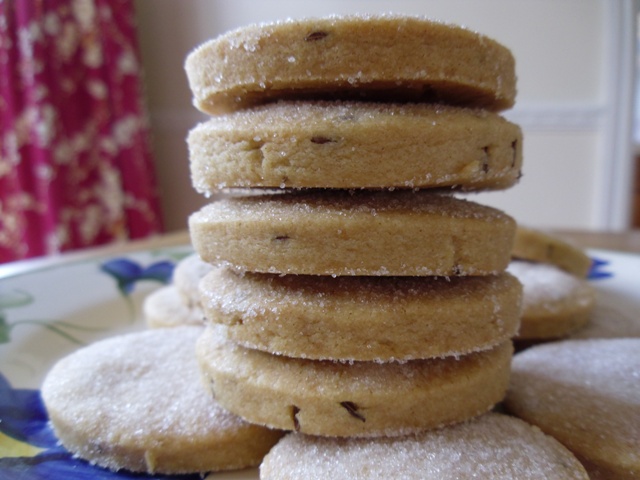
Last time, I teased you with a photo of a spice and asked you to guess what it was. Well, I can now reveal that they're caraway seeds and they're the essential ingredient in a traditional Lancashire treat, Goosnargh Cakes. Tradition has it that they were originally eaten on feast days such as Easter and Whitsun, though they're now available all year round. Goosnargh (pronounced Goozna) is a small town also known for its corn-fed ducks and chickens and much loved by celebrity chefs.


I first came across Goosnargh Cakes at a bakery in Preston, Elsie's Pantry, which sadly closed down several years ago. The cakes are actually a shortbread (shortcake), which is probably my all-time favourite kind of biscuit. It's the caraway seeds which give them their distinctive slightly aniseed flavour. However, don't worry if you don't like aniseed as it's more of a hum in the background unless you add a lot.

The other spice found in Goosnargh Cakes is ground coriander though there are mixed views on whether it should be included or not. However, as it seemed an unusual flavouring for a biscuit, I decided to give it a go. And the result? To be honest, I'm not sure I could taste it but maybe it's one of those background flavours that you'd miss if it wasn't there.


You'll also notice quite a bit of sugar on the top of the cakes. There's only a small amount in the mixture but you make up for it by sprinkling a lot on later! The first sprinkle is added when the cakes are raw as the idea is that the sugar melts and forms a crust as they bake. One of the recipes said to add a 1/4 inch layer! I was much less generous than that. A second sprinkling is then added when they're hot out of the oven. I actually don't remember there being a sugar crust on the cakes I ate from Elsie's so they must have added more sugar to the recipe itself, which is an option if you don't like to see the amount of sugar you're eating!

What I can say is that this recipe gives a gloriously crumbly, melt-in-the mouth texture and I've had to restrain myself from scoffing the lot in one go. Have I tempted you enough yet? OK then, time to make yourself a batch - I'd love to know what you think if you do decide to give the recipe a go.


Goosnargh cakes

110g butter
20g caster sugar
180g plain flour
1tbsp caraway seeds
1tbsp ground coriander
extra caster sugar for sprinkling

1. Cream together the butter and sugar.
2. Combine the flour, caraway seeds and ground coriander and mix with the sugar and butter.
3. Use your hands to pull the mixture into a dough, then roll out to 1/4 inch thick.
4. Cut out rounds using a cutter - mine was a 2 1/4 inch cutter.
5. Put the rounds onto a baking sheet leaving a little space between to allow for spreading during baking.
6. Sprinkle with caster sugar. 
7. Put the tray in the fridge for a couple of hours or overnight to firm up.
8. Preheat the oven to 140C/120C Fan/Gas 1.
9. Bake the cakes for about 30 minutes until firm, though don't let them brown.
10. Sprinkle with more sugar and leave to cool on the baking tray.

Friday, 25 January 2013

Burns Night Supper

Robert Burns by Alexander Nasmyth

Today is the birthday of the Scottish poet, Robert Burns, and all over Scotland and parts of the world with Scottish connections, people will be gathering to celebrate his life and poetry. These gatherings are known as Burns Nights or Burns Suppers.

As our friend, Gordon, is Scottish, and it was his birthday recently, we invited him, Sue and their little boy over for a night of food and entertainment (though for scheduling reasons we celebrated last weekend).


They arrived dressed for the occasion: Gordon in tartan pyjama bottoms and Sue in a handmade sporran!

And so to the festivities. Formal Burns Suppers have a traditional running order and I adapted this one from the BBC web site.

Piping in of the guests


With the meal ready to be served, our guests were invited into the dining room to the sound of bagpipes. Well, you can't have a Scottish celebration without bagpipes!

The Selkirk Grace
Before the arrival of the food, a short prayer was offered, in best Scottish accent.

Some hae meat and canna eat,
And some wad eat that want it,
But we hae meat and we can eat,
And sae the Lord be thankit.

Piping in of the Haggis


The haggis was brought in on a 'silver' platter to the sound of the national anthem, Scotland the Brave, and paraded around the table.

Haggis is a national delicacy and is basically pig offal, oats and rusk cased in pig stomach, though ours was cased in plastic. They can be microwaved, baked or steamed. I chose the latter so it could be kept in the casing for the next important element. I'm guessing that some of you reading this will be thinking 'bleurghh', but it's actually very tasty!

Address to the Haggis
Gordon read the Burns poem, Address to a Haggis, and I plunged in the knife at these immortal words,

'Cut you up wi' ready sleight,
Trenching your gushing entrails bright'

I have to tell  you that the entrails really did gush! As soon as the knife went in, the contents erupted through the hole!

Toast to the Haggis
A short toast with a wee dram of Crabbies Green Ginger Mac, a blend of ginger wine and whisky. Yum! I  usually can't stand whisky but this was delicious.

The meal


As well as the haggis, I served the other traditional accompaniment, neeps and tatties, otherwise known as potatoes and swede, using this recipe. Plus chantenay carrots and gravy.

Entertainment
After the main course, it was time for some appreciation of the works of Burns. Gordon read his poem, My luve is like a red red rose, and we listed to a rendition of Rantin' Rovin' Robin.

Toast to the Laddies and the Lassies
We raised our glasses to salute first the gentlemen present and then the ladies.

Dessert
Not at all Scottish, but Sue brought chocolate cake so we ate that with cream. A more traditional offering would be cranachan or clootie pudding. We listened to some classic tunes such as (our favourite) Doon in the wee room  and Donald, where's yer troosers.

Auld Lang Syne
Words by Robert Burns and probably his most famous though, luckily, I'd printed out the lyrics as no-one really knows the words! We held hands and sang along to the the tune everyone will recognise from New Year's Eve celebrations, backed by the BBC Symphony Orchestra and chorus. However, I wanted to share this hauntingly beautiful version with you which Chickpea and I haven't been able to get out of our heads.


And thus concluded our Burns Supper. The meal over, we retreated to the living room for one last dose of Scottishness: the DVD of Brave.

I hope you enjoyed the Home Jules version of a Burns Supper. We had a great time and laughed a lot. Maybe it's time to introduce Supper nights to honour other national poets? Which poet would you choose and what would you include?

Tuesday, 27 November 2012

Lancashire Day


Did you know that today is Lancashire Day? Did you even know there was such a thing as Lancashire Day? No, me neither, but I stumbled across a reference to it on the internet and was intrigued. 27 November marks the day in 1295 when Lancashire sent its first representatives to Parliament and is championed by the Friends of Real Lancashire. There are events being held throughout the County before, during and after the big day.

After finding out about Lancashire Day, my mind raced with all the possibilities for celebrating with the girls at work (as it's on a work day). First we would have to begin with the Proclamation:

"Know ye also, and rejoice, that by virtue of Her Majesty's County Palatine of Lancaster, the citizens of the Hundreds of Lonsdale, North and South of the Sands, Amounderness, Leyland, Blackburn, Salford and West Derby are forever entitled to style themselves Lancastrians. Throughout the County Palatine, from the Furness Fells to the River Mersey, from the Irish Sea to the Pennines, this day shall ever mark the peoples' pleasure in that excellent distinction - true Lancastrians, proud of the Red Rose and loyal to our Sovereign Duke."
Then, every good public celebration has to have a parade so, a parade around the desks, everyone holding aloft a red rose (the symbol of Lancashire) or a Lancashire peeler. A what? Yes, Lancashire has its very own style of peeler.


Now you might be thinking that this looks like any other kind of peeler but it's all in the detail. What makes this one a Lancashire peeler is the twine around the handle.

For a good celebration, you also need music, preferably traditional but with a modern twist as befits the occasion. Maybe something like this.


With the music in place, there could be maypole dancing around the coatstands or clog dancing, if anyone can find their clogs.


And of course, food. Savoury treats like Bury black pudding, Lancashire cheese, Lancashire hotpot and butter pies. And for dessert: Chorley cakes, Eccles cakes and Goosnargh cakes. Lancashire is clearly keen on cakes.

Animated with excitement and enthusiasm, I shared these thoughts with the girls at work. They laughed and gently suggested it might be time I had a day off. Ah well. In the end, we are going to have a mini celebration by having coffee and the Eccles and Chorley cakes and I'll be proudly wearing my handmade Lancashire rose brooch which I'll share with you next time. And I'll write about Goosnargh cakes and some of the other foods one day too.

In the meantime, to all proud Lancastrians, I wish you a very happy Lancashire Day!

Sunday, 4 November 2012

Bonfire Night: Parkin


My second Bonfire Night recipe is Parkin: a dark, chewy, crumbly, gingery cake. It can be bought all year round but is most traditionally associated with this time of year. The recipe is also known as Yorkshire Parkin and contains treacle. There is another version, Lancashire Parkin, which is much lighter in colour and texture because it contains both treacle and golden syrup.

Oh dear, I can feel the spirits of my Lancashire ancestors disowning me but, whisper it, I think I prefer the Yorkshire version*. However, as I've played around with the recipe by altering the spices, adding extra ingredients to make it even more gingery, and I'm a Lancashire girl, maybe they'll forgive me if I call it Larkshire Parkin?

By far the hardest part of this recipe is that, after baking, you should leave it to one side for a few days to allow the flavour to develop. It's worth the wait, I promise!

Larkshire Parkin

175g treacle
150g butter
100g dark muscovado sugar
3 pieces of stem ginger, coarsely grated
1 teaspoon fresh ginger, finely grated
175g plain flour
1 teaspoon bicarbonate of soda
2 teaspoons ground ginger
1 teaspoon ground cinnamon
1 teaspoon freshly grated nutmeg
1/4 teaspoon mace
275g medium oatmeal
1 egg
150ml milk
1 tablespoon ginger syrup (from the jar of stem ginger)

1. Preheat the oven to 180C/160 Fan/350F/Gas 4
2. Put the treacle, butter and sugar into a pan and heat gently until the butter and sugar have melted. Cool slightly. Add the grated stem ginger and fresh ginger.
3. Sift the flour, bicarbonate of soda and spices into a large bowl and add the oatmeal.
4. Mix the egg, milk and ginger syrup together in a separate bowl.
5. Add the egg mixture and treacle mixture to the dry ingredients and stir well.
6. Pour into a lined 20cm square deep tin. The mixture is quite runny but don't worry - as it bakes the oatmeal will absorb the moisture. Bake for 55 minutes or until firm.
7. Cool in the tin for 10 minutes before turning out.
8. When completely cold, wrap in greaseproof paper and store for a few days to allow the flavour to develop.


Parkin can be served on its own but it's also traditionally served sliced with butter. However, I still had some of the maple buttercream from the Halloween muffins so Chickpea and I decided to have a taste off.


Two slices were spread with butter (thickly for Chickpea and a thin scraping for me) and two with the buttercream. Which would we prefer? Well, I was expecting the buttercream to win but, as Chickpea noted, the maple flavour somehow seemed to minimise the ginger of the parkin. We were both unanimous that butter was the perfect combination.

This is the first time I've made parkin and the first time I've tasted it in many years but I'll definitely be making it again: I'd forgotten just how delicious it is.

I'd love to know what you think if you decide to make this recipe. However, if you don't fancy trying parkin but like the idea of a ginger cake, my all-time favourite ginger cake recipe is Preserved Ginger Cake with Lemon Icing by Delia Smith. I've made it lots and lots of times and it's always absolutely yummy - mmm, mmm!

*Lancashire-Yorkshire rivalry has been around for several centuries - see the War of the Roses.

Saturday, 3 November 2012

Bonfire Night: Black peas


It's almost Bonfire Night when England remembers Guy Fawkes' failed attempt to blow up the Houses of Parliament in 1605. As well as memories of bonfires and fireworks, I mostly remember the food we used to eat. In this and the next post, I'd like to introduce you to some of these traditional dishes from my Lancashire childhood.

Today it's the turn of Black Peas. I only ever remember eating these on Bonfire Night and always out of a polystyrene cup with a plastic spoon. However, on some Northern fairs and markets, you can buy them all year round. In Preston, they are known as parched peas: parching apparently being an old English word for long, slow boiling. Amazing what you learn when blogging!

Intrigued to find out if parched peas are the same as black peas, I queued at a food van on the Flag Market and handed over my 75p for a small portion. I wasn't the only one buying that day as the older gentleman in front of me also bought a portion. In fact there were three food vans on the market selling parched peas which must be a sign of its popularity in Preston.


Sure enough, the portion was handed to me in a polystyrene cup with a white plastic spoon. The traditional acccompaniment is salt, vinegar and pepper. I'm happy with just malt vinegar so I added a good splash and went off to find a quiet corner to taste my first black peas in many years.


The peas were a lighter colour than I remember but the flavour was the same. The texture should be al dente and I'd say more closely remembers a cooked dried bean than a pea. Earthy and, in this case, quite peppery which must have been an addition by the vendors. Lovely, warming and tasty on a chilly day.


The peas don't seem to be widely available but in this area you can buy them from fruit and veg stalls in markets. Mum says they can also be found in pet shops where they're known as pigeon peas (ie. for feeding to pigeons!), but I'm not sure whether these would pass food safety standards for human consumption. According to Wikipedia, they are purple podded peas, also known as maple peas. All very confusing, so the best advice is to wander over to Lancashire to be sure of what you're buying!

My peas came ready-bagged and included the bicarbonate of soda tablet shown above for the pre-soaking process. On other stalls, tubs of bicarb were sold separately. So, how do you cook them? Well, the recipe is so simple it can hardly be called a recipe. However, this is the one handed down to my Mum from my Nanna and now to me.

1. Soak 200g peas overnight in a bowl of cold water with 1 teaspoon of bicarbonate of soda.
2. The next day, drain the peas and rinse well.
3. Put in a pan and cover with water. Bring up to the boil and then simmer until the peas are soft. They should not be too mushy but still have some bite to them (al dente).
4. Add salt and pepper to taste - the liquid will turn milkier as you do this.
5. Serve in a mug with plenty of malt vinegar.


Black peas are usually served on their own as described above. However, Mum remembers her Auntie Maggie mixing them in with minced beef and onion to flesh out a dish. I decided to serve them as a side dish with sausages and corn on the cob.


OK, so they're not going to win any beauty contests but they do taste good. Why not give them a go?